Edmonton Snow Removal Schedule 2026–27: When Your Street Actually Gets Cleared
How the Edmonton snow removal schedule works — plow priorities, parking ban phases, the 5 cm snowpack rule, windrows, and what's still your job.
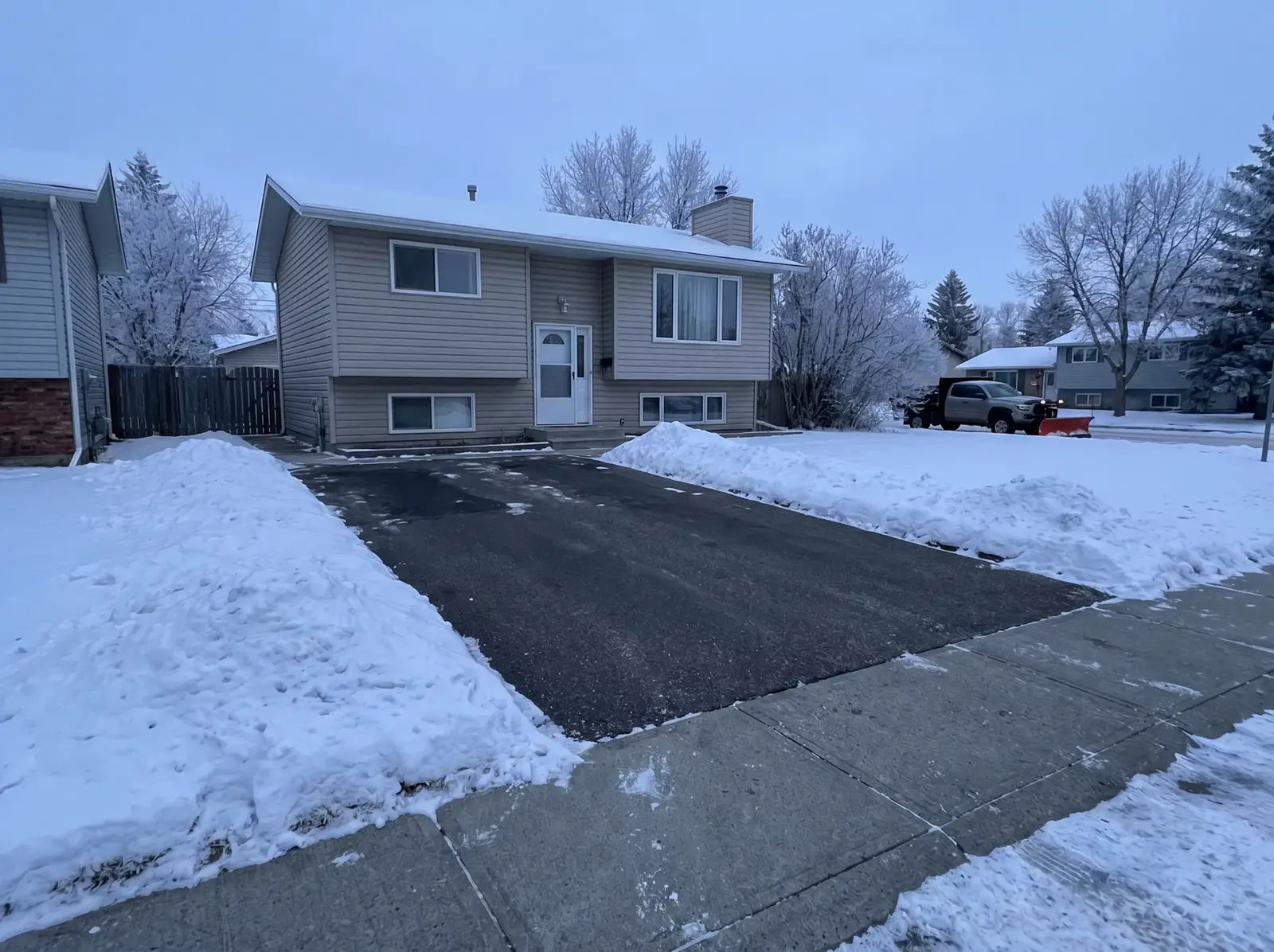
Every February, half of Edmonton stands at a front window watching a rutted street and asking the same question: when is a grader actually coming? The Edmonton snow removal schedule is a real, published system — four road priorities, two parking ban phases, and a snowpack standard that surprises people the first time they read it. It's just that almost nobody reads it until they're already annoyed. Here's how the schedule works for the 2026–27 winter, what the City clears, what it deliberately leaves, and which stretches of concrete are legally yours no matter how the season goes.
What Is the Edmonton Snow Removal Schedule?
The City sorts every road into one of four priorities and works down the list. According to the City of Edmonton's published snow clearing service levels, the targets after snowfall ends are:
- Priority 1 — main freeways, bus routes, downtown, business districts and hills: bare pavement within 1 day.
- Priority 2 — remaining freeways, arterial and collector roads, Park and Ride lots: bare pavement within 5 days.
- Priority 3 — industrial and rural roads: bare pavement within 6 days.
- Priority 4 — residential roads: bladed to a 5 cm snowpack, with the full cycle finished within 14 days once residential blading begins.
Read that last line again, because it's the one that causes the front-window frustration. Your street isn't forgotten; it's fourth. With roughly 3,800 kilometres of residential roadway in the city, a full residential pass is a genuinely large undertaking, and it only starts once conditions warrant it.
How Long Until My Residential Street Gets Plowed?
Once a residential blading cycle is underway, the City works neighbourhood by neighbourhood and aims to complete all of them inside 14 days. Any one neighbourhood is usually in and out of the process in about three days. You get warning: yellow no-parking signs go up at the main entrances to a neighbourhood at least 24 hours before crews arrive, and you can subscribe to the City's service notifications or check the Roadways Snow Clearing Map with your address to see your scheduled window.
Set your notification for your home address and your workplace address. The number of people who move the car at home and then get towed off a street two neighbourhoods over is higher than you'd think.
What Are Phase 1 and Phase 2 Parking Bans?
Edmonton's seasonal parking ban is the tool that makes the schedule work — a grader can't clear a lane full of parked cars, and it won't try.
Phase 1 is city-wide and applies to any road marked with white seasonal no-parking signs: major roads, bus routes, business areas. It runs 24 hours a day for the entire three-to-five-day period. Phase 2 moves into residential and industrial neighbourhoods and can stay in effect up to 14 days overall, even though your specific neighbourhood is typically only affected for about 72 hours.
The consequences are not symbolic. Parking in an active ban zone can earn a $250 ticket, and your vehicle can be towed to the nearest cleared roadway. And one detail worth holding onto: not every snowfall triggers a ban. A parking ban is declared based on conditions, so the safe habit is checking rather than assuming.
Why Isn't My Street Cleared to Bare Pavement?
Because it isn't supposed to be. Residential roads are maintained to a level 5 cm snowpack on purpose. That base layer keeps windrows smaller, keeps gravel and sand where it belongs, and — the big one in a city that can swing 25 degrees in a chinook week — dramatically reduces flooding when everything melts at once.
The trade-off is ruts. By late January a residential street in Edmonton can look like a topographic map, and blading it flat again is exactly what a residential cycle does. So a rough street isn't proof you've been skipped. It's usually proof you're due.
Who Clears the Windrow at the End of My Driveway?
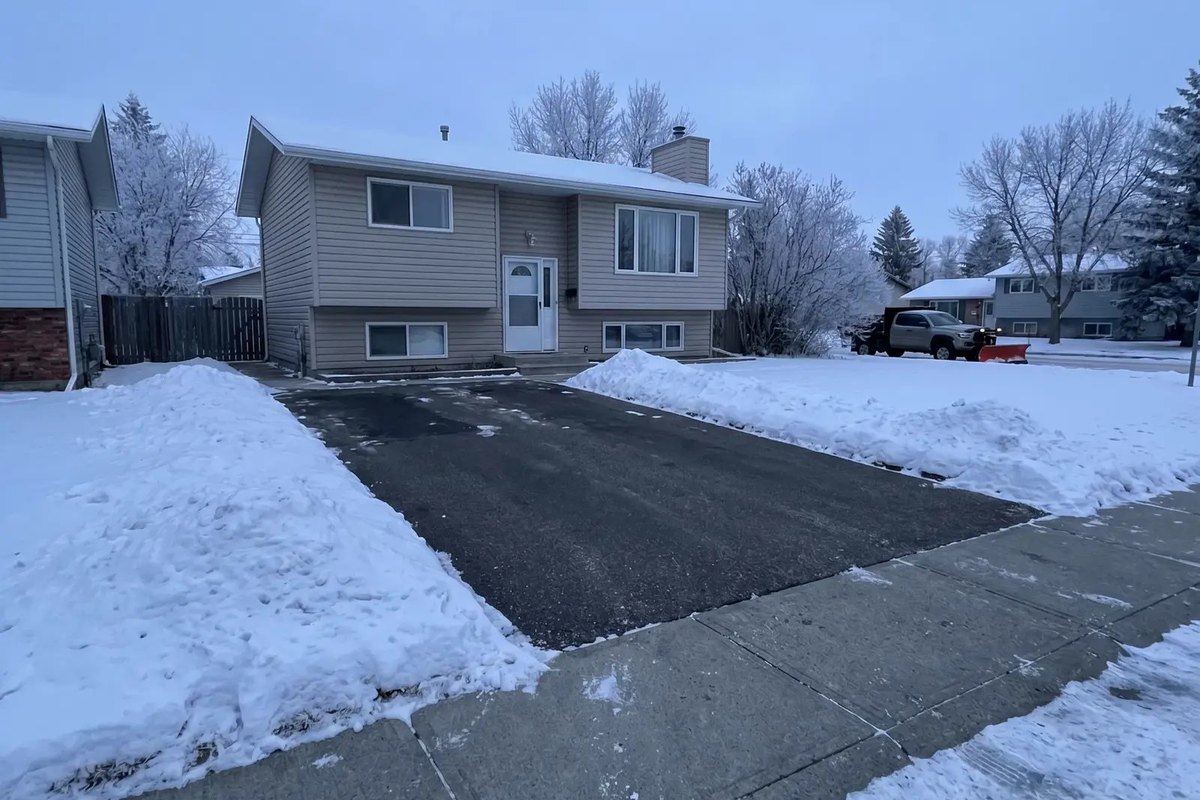
On a standard residential road, you do. The City removes driveway windrows only when they measure 30 cm or higher within four hours of clearing — anything shorter than that is the property owner's problem. Windrow removal is provided on arterial and collector roads, bus routes, designated windrow-free zones, and cul-de-sacs.
This is the single most predictable winter chore in Edmonton and the one people plan for least. The grader comes through on the schedule you were told about 24 hours earlier, and you come home to a metre-wide ridge of compacted snow across your apron that has already started to set up. Fresh, it's fifteen minutes of shovelling. After a −30 °C night, it's an ice sculpture with your car keys behind it.
What Does the City Not Clear at All?
The list is shorter than the schedule but it's the part that costs homeowners money:
- Your public sidewalk. Under the Community Standards Bylaw you must clear the sidewalk bordering your property of snow and ice within 48 hours of a snowfall. Miss it and you risk a fine, plus the cost of City-arranged clearing on your tax bill.
- Your driveway and walks. Never City work, at any priority level.
- The windrow at your apron, unless it clears the 30 cm bar above.
- Ice from freeze–thaw. Meltwater off your eaves refreezing overnight into a glare-ice patch on your walk is your liability, and it's the failure mode that actually hurts people.
How Do You Plan Residential Snow Removal Around the Schedule?
Work backwards from the two dates you can't control. Edmonton's first measurable snowfall usually shows up in October — you can watch Environment Canada's Edmonton forecast all you like, but it isn't a booking system. And the City's residential blading cycle happens when it happens, windrow included.
So the practical setup for most homeowners is a snow removal service that handles the driveway, the walks, the sidewalk the bylaw assigns you, and the windrow after a City pass — on a trigger depth and response window you agreed to in writing. If you're weighing per-visit against a seasonal contract, our Edmonton snow removal cost guide lays out the 2026–27 market ranges and what each pricing model actually covers.
Book in September, or October at the outside. Winter route lists get built in early fall, and the difference between a September call and a December one isn't the price — it's where you sit in the queue during the storm everyone else is also calling about. Commercial properties run tighter still: commercial lots and entrances need to be clear before opening, which is a schedule the City's priority list was never designed to serve.
One Call, Then Stop Thinking About It
The City's schedule is genuinely reasonable once you know what it promises and what it doesn't. Everything it doesn't cover — driveway, walks, sidewalk, windrow, ice — is the part we do. We run snow removal for homes and businesses across Fort Saskatchewan, Sherwood Park and Edmonton, on seasonal contracts and per-visit calls. Send us your address and we'll quote your property before the 2026–27 route list fills. Then, come spring, our spring cleanup guide is waiting for whatever the melt leaves behind.
Get on the 2026–27 Winter Route List
Driveway, walks, sidewalk and windrow — cleared on a schedule you agreed to, not one you're waiting on.